
Skip to content

Who CMMC applies to.

Not sure if CMMC applies to you? If you're anywhere in the DoD contract chain, it probably does.


The Cybersecurity Maturity Model Certification (CMMC) is the Department of Defense's (DoD) required certification program for contractors handling Federal Contract Information (FCI) or Controlled Unclassified Information (CUI). CMMC 2.0 aligned the model to NIST SP 800-171 and introduced three levels, with requirements now appearing in DoD contracts on a phased schedule through 2028. The question might not just be whether CMMC applies to you — it's more likely about which level, when, and how much of your existing program can carry you there.

Who's in scope:

  • Prime contractors holding DoD contracts involving FCI or CUI
  • Subcontractors at any tier when CMMC requirements flow down from a prime
  • Suppliers and service providers in the Defense Industrial Base supply chain
  • Cloud and MSP partners whose services touch the CUI environment (shared-responsibility scope)
  • Any organization preparing for upcoming DoD solicitations naming CMMC as a contract award condition

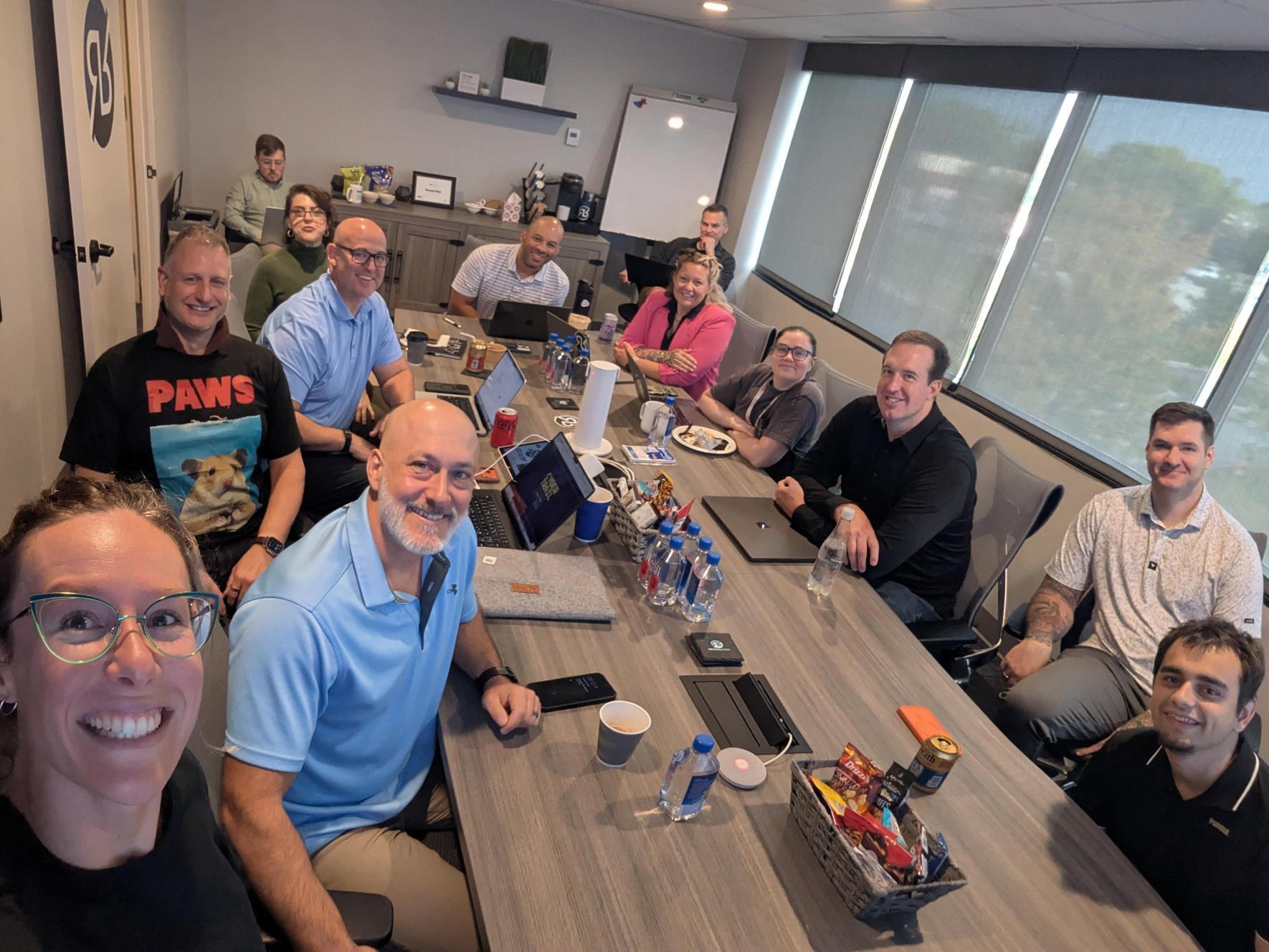
Defense staff members in discussion

Where Reveal Risk fits in your CMMC path

We're not your assessor. We're the team that gets you ready for one.

There's a clear line between the assessor's role and ours. C3PAOs (CMMC Third-Party Assessor Organizations) and DIBCAC (Defense Industrial Base Cybersecurity Assessment Center) teams are bound by independence rules that prevent them from telling you how to pass. They assess what you've built. 

We sit on the other side of the table: scoping the CUI environment, building the System Security Plan (SSP), closing technical gaps, and walking you through what your assessor will ask before they ask it.

Shield icon
Defining a tight, well-scoped CUI boundary
And, keeping it small.
Document icon
Building a System Security Plan
An SSP an assessor can actually use.
Gear with infinity symbol icon
Closing technical gaps
Against specific assessment objectives, not just the spirit of the control.
Balanced scale icon
Coordinating shared responsibility
With your cloud and MSP (Managed Service Provider) partners.
Person in circle with arrows icon
Producing evidence
In a form a C3PAO or DIBCAC team can review efficiently.
Handshake icon
Walking you through pre-assessment readiness
So there are no surprises at fieldwork.

Where companies typically need help.

The gaps we see most often when we walk in.


Most DoD contractors have meaningful cybersecurity controls already — often built against NIST 800-53, ISO 27001, or SOC 2. The trouble with CMMC isn't that the controls are exotic. It's that the boundary, the documentation, and the assessment-readiness work are different from anything those programs were designed to produce.

Where clients need help:

  • Scoping the CUI boundary tightly — and minimizing it instead of expanding it
  • Building a System Security Plan strong enough to survive C3PAO scrutiny
  • Closing technical gaps in things like multi-factor authentication, encryption, and logging — built to what the assessor actually checks, not what looks good on paper
  • Coordinating shared responsibility with cloud and MSP partners so inherited controls hold up under review
Rectangle 43 (4)
map-once-nis-2-reveal-risk

Integrate, don't duplicate.

If you already operate NIST 800-53, ISO 27001, or SOC 2, you've done more of the underlying CMMC work than you realize. We map what you have to NIST 800-171 control families and only build what's genuinely missing. 

How Reveal Risk gets you ready.

Scope it, build it, prove it — the three things every CMMC assessor will check.

We organize CMMC readiness around three pillars that mirror how your assessor will actually evaluate you. Where your existing programs already cover a requirement, we reuse them. Where CMMC asks for something new, we build it with you and embed it into how you already operate. 

Define CUI Scope
Implement & Document Controls
Assessment Readiness
Know what’s in, what’s out, and where responsibility changes hands.
  • Find the CUI — map where sensitive government information lives, moves, and gets touched across your systems and your partners
  • Draw the boundary — define what's in scope for assessment and what's deliberately kept out
  • Sort out shared responsibility — get clear on which controls you own and which your cloud and MSP providers cover
  • Keep the scope small — the smaller and tighter the boundary, the cheaper and faster the assessment
  • Build on what you have — reuse the NIST 800-53, ISO 27001, or SOC 2 work you've already done
Turn existing security work into assessor-ready controls and documentation.
  • Close the control gaps — work through the 110 NIST 800-171 controls, highest-impact first, building only what's missing
  • Write the SSP — a real, usable System Security Plan covering every control and the people responsible for it (this is the first document assessors open)
  • Build the policy backbone — policies and procedures tied directly to your CMMC controls, not generic templates pulled off a shelf
  • Harden the technical controls — multi-factor authentication, strong encryption, logging, and access controls configured the way assessors actually check
Make the evidence easy to review before the real assessment begins.
  • Package the scope — asset inventory, network diagrams, and data-flow documentation in the format your assessor expects
  • Build the POA&M — a Plan of Action & Milestones for any open items, with realistic dates the assessor can really accept
  • Organize the evidence — every control mapped to the proof behind it, so the assessment moves quickly
  • Run a dry run — a mock assessment walkthrough so the real one holds no surprises
Define CUI Scope
Vector 22
Know what’s in, what’s out, and where responsibility changes hands.
  • Find the CUI — map where sensitive government information lives, moves, and gets touched across your systems and your partners
  • Draw the boundary — define what's in scope for assessment and what's deliberately kept out
  • Sort out shared responsibility — get clear on which controls you own and which your cloud and MSP providers cover
  • Keep the scope small — the smaller and tighter the boundary, the cheaper and faster the assessment
  • Build on what you have — reuse the NIST 800-53, ISO 27001, or SOC 2 work you've already done
Implement & Document Controls
Vector 22
Assessment Readiness
Vector 22

FAQ. 

The questions security and contracts leaders ask us first.

14760169
How long does CMMC readiness typically take?
We already have SOC 2 (or ISO 27001, or NIST 800-53). How much carries over?
What's the difference between CMMC Level 1, Level 2, and Level 3?
What's the difference between CMMC and NIST 800-171?
Who needs to be CMMC certified?
Our prime is requiring CMMC by a specific date. Can you meet that timeline?
Do you help us pick a C3PAO, or do we bring our own?
Do we need to be in scope today, or can we get ahead?

A clear CMMC path, built by people who've done it before.

Get the latest from our team.