Skip to content

Human Risk Management in Cybersecurity. 

banner-image

Human risk requires a new security model.

Attackers no longer need to break into systems—they simply log in. 

Phishing, credential theft, and social engineering exploit everyday human behavior, making people the most frequently targeted attack surface in the enterprise. 

Most organizations respond with awareness training alone. But training by itself cannot meaningfully reduce human cyber risk. 

Human Risk Management (HRM) takes a broader approach. It combines behavioral science, process design, and security strategy to reduce human cyber risk across the organization. 

Rectangle 39
What frameworks do you cover?

Why human risk is the biggest security challenge.

Human error is often described as the weakest link in cybersecurity. But the problem is rarely the employee. It’s the systems and processes employees are forced to use.

Common realities inside organizations:

  • employees must open emails from unknown senders to do their job
  • insecure workflows are faster than secure ones
  • security teams operate separately from business operations
  • awareness programs prioritize compliance instead of risk reduction

When the fastest way to get work done is insecure, training alone will never fix the problem.

Human Risk Management focuses on redesigning systems so secure behavior becomes the default.
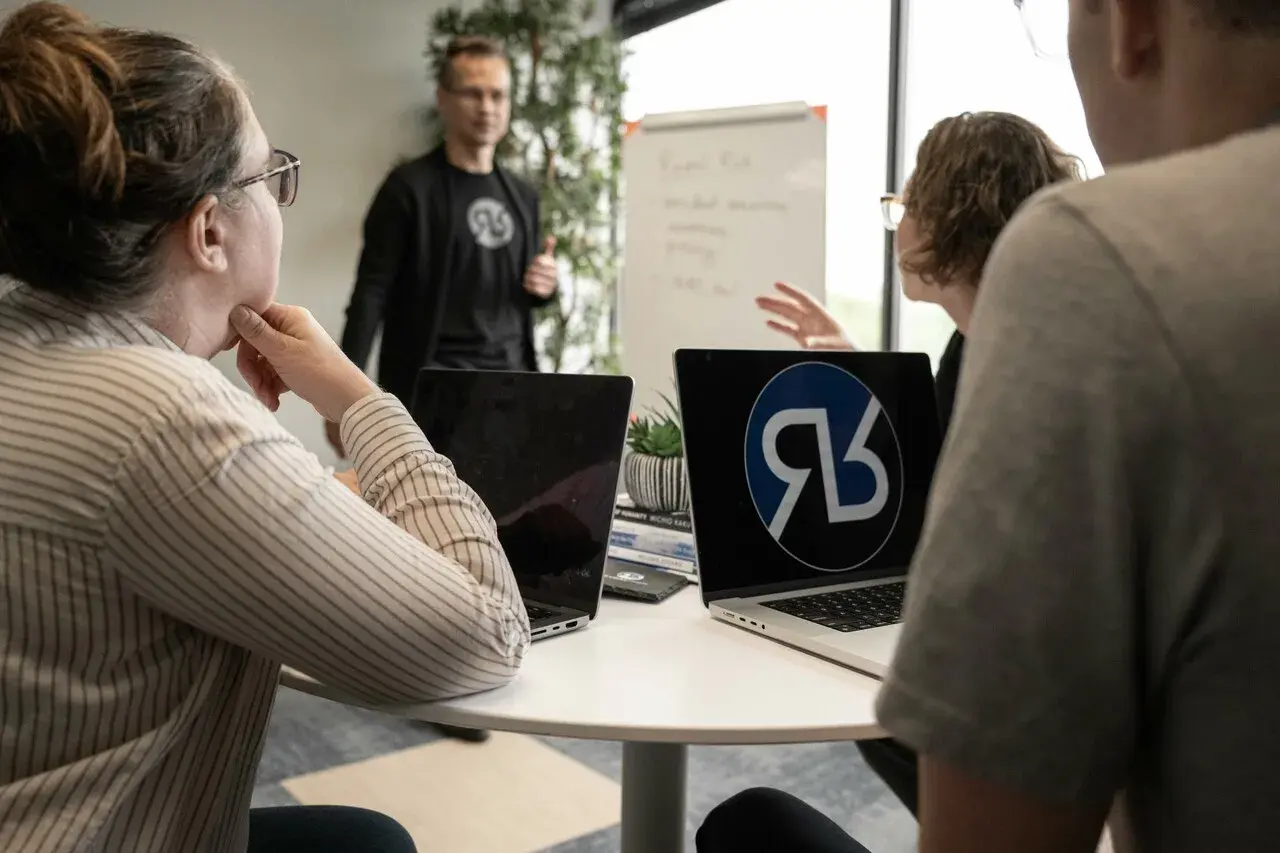
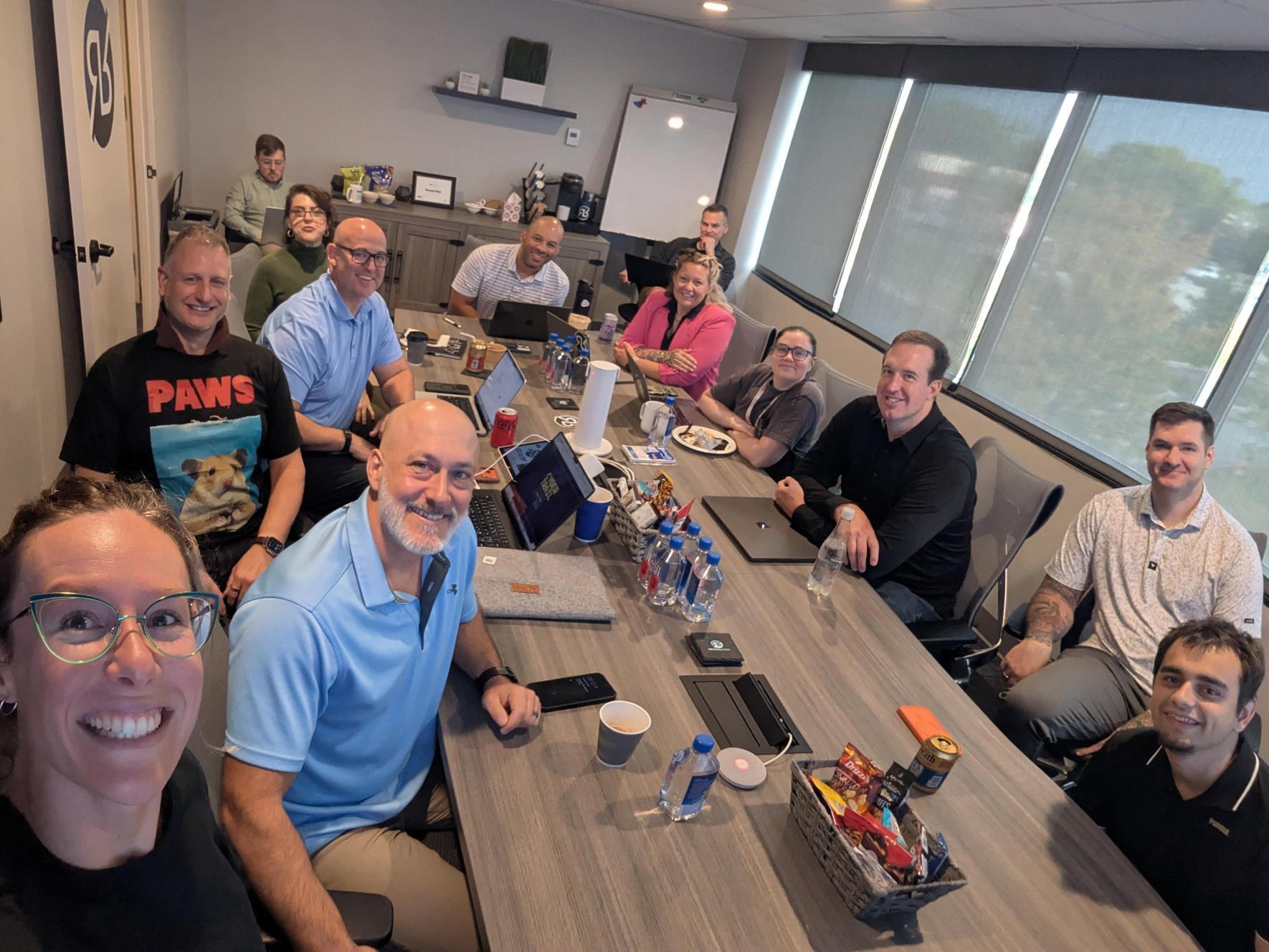
Reveal Risk team discussing HRM solutions
Woman presenting data on vertical screen to others around conference table.

What is Human Risk Management?

Human Risk Management (HRM) is a strategic cybersecurity discipline focused on reducing security risk created by human behavior in everyday work.

Rather than relying solely on awareness training, HRM applies the same principles used in other risk management disciplines:

  • Identify sources of risk
  • Design and implement mitigation
  • Measure impact
  • Continuously improve


A mature HRM program integrates several disciplines:

Security Behavior Engineering

Design workflows that naturally guide employees toward secure behavior.

Secure Process Design

Improve business processes so security becomes the easiest choice.

Security Awareness Strategy

Targeted training aligned with real organizational risks and roles.

Security Culture & Champions

Empower employees across departments to reinforce security behaviors.

Why traditional security awareness programs fail.

Many organizations still rely on awareness tactics designed for a very different threat landscape—one where annual training and periodic phishing tests were considered sufficient.

But today’s attacks exploit real-time human decisions inside complex workflows, and legacy awareness programs are rarely built to influence behavior at that level.

Common problems include:

Training without context
Compliance-driven programs
One-size-fits-all education
Security vs. productivity tradeoffs
Real risk happens inside everyday work

Traditional awareness programs often deliver generic guidance divorced from the situations employees actually face. When training lacks relevance to daily workflows, employees struggle to recognize how security applies in real decisions—making lessons easy to ignore and difficult to apply under pressure. 

Checking the box does not reduce the risk

Many organizations design awareness initiatives primarily to satisfy audit requirements, regulatory checklists, or policy mandates. While these programs may demonstrate formal compliance, they often fail to meaningfully reduce exposure to human-centered cyber threats.

Risk exposure varies by role

Different roles across the organization face different threat profiles, yet many programs deliver the same training to everyone. A finance executive approving wire transfers encounters very different risks than a software engineer managing privileged access.

Secure behavior must also be usable

When secure processes create friction, employees often bypass them in order to stay efficient. If security feels like an obstacle to getting work done, even well-intentioned staff will default to faster, less secure alternatives.

Training without context
Vector 22
Real risk happens inside everyday work

Traditional awareness programs often deliver generic guidance divorced from the situations employees actually face. When training lacks relevance to daily workflows, employees struggle to recognize how security applies in real decisions—making lessons easy to ignore and difficult to apply under pressure. 

Compliance-driven programs
Vector 22
One-size-fits-all education
Vector 22
Security vs. productivity tradeoffs
Vector 22

Effective Human Risk Management addresses the systems that shape behavior, not just the behavior itself.

The Reveal Risk Human Risk Management (HRM) approach.

Reducing human cyber risk requires more than awareness campaigns or phishing simulations. It requires a structured approach that identifies risk, improves systems, and continuously adapts as threats, and ways of working, evolve.

Reveal Risk uses the SHIFT Framework to design Human Risk Management programs that reduce human-driven cyber risk while supporting how people actually work.

The SHIFT Framework

Reveal Risk team HRM approach
S — Surface human risk
H — Harmonize workflows
I — Influence behavior
F — Fortify the workforce
T — Track outcomes

Lorem ipsum dolor sit amet, consectetur adipiscing elit, sed do eiusmod tempor incididunt ut labore et dolore magna aliqua. Ut enim ad minim veniam quis nostru.

Name Lastname | Company

Why this Human Risk Management framework works

The SHIFT framework ensures organizations move beyond checkbox compliance and toward measurable risk reduction. 

Instead of asking employees to constantly choose between security and productivity, we help organizations design systems where security becomes the natural way work gets done.

Reveal Risk has been an excellent partner for us as we established our Cyber Security Awareness & Training program. They have partnered with us on several aspects of our program, including launching the program, creating a repeatable cadence of activities, driving engagement through the creation of a champions network, creating informative and quick knowledge articles and artifacts, revamping our internal online hub for disseminating information to our colleagues, and even helping us create and introduce a mascot for our program. 

Steve Black | Senior Director, Governance, Risk, and Information Protection at Viatris
 

Our Human Risk Management services.

Reveal Risk partners with organizations to build and operationalize Human Risk Management (HRM) programs—connecting strategy, process design, and behavioral engagement to reduce human-driven cyber risk.

While many clients engage us at the program level, we also provide targeted services that address specific gaps or priorities. These services can be delivered independently or as part of a broader, integrated HRM roadmap.


Security Awareness Strategy & Training
Secure Process Review & Enhancement
Ethical Phishing Programs
Deepfake Awareness Experiences
Security Champions Programs
Cybersecurity Awareness Month Campaign-in-a-Box
Build programs aligned to real risk—not generic content

Move beyond generic awareness programs and toward a strategy aligned with real organizational risk. 

We design and implement security awareness initiatives that reflect how your employees actually work—focusing on the decisions, behaviors, and threat scenarios that matter most. Rather than relying on one-size-fits-all training, we tailor programs by role, risk exposure, and business context. 

Our team combines behavioral science, threat intelligence, and real-world practitioner experience to create programs that are engaging, relevant, and actionable. From foundational training to targeted campaigns and live experiences, every initiative is designed to drive measurable improvements in security behavior.

Redesign workflows so secure actions become the default

Security failures often originate in broken or inefficient processes—not just human error. 

We analyze how work actually gets done across your organization, identifying where workflows, approvals, and systems introduce unnecessary risk or friction. From there, we redesign processes so that secure actions become the easiest and most natural path for employees. 

This includes improving decision points, reducing workarounds, and aligning security controls with real business needs—resulting in stronger security outcomes without sacrificing productivity.

Simulate real attacks to uncover and reduce human risk

Simulated phishing should do more than test employees—it should generate actionable insight. 

We design and execute ethical phishing programs that reflect real attacker techniques, targeting the scenarios most relevant to your organization. Campaigns are tailored by role, risk level, and current threat trends to ensure realism and impact. 

Beyond metrics, we focus on what the data actually means—identifying patterns, high-risk groups, and opportunities for improvement. The result is a program that not only measures susceptibility, but actively reduces it over time.

Show—not just tell—how modern attacks actually work

Deepfake-enabled attacks are no longer theoretical—they are actively being used to impersonate executives, manipulate employees, and bypass traditional controls. 

We deliver immersive, customized demonstrations that show your workforce exactly how these attacks unfold in real time. By simulating realistic scenarios using your organization’s context, we help employees understand both the sophistication of the threat and their role in preventing it. 

These experiences go beyond awareness—they create lasting recognition, stronger reporting behaviors, and more confident decision-making under pressure.

Scale security through trusted voices inside your organization

Build a distributed network of internal advocates who reinforce secure behavior across the organization. 

We help design and launch security champions programs that empower employees within different departments to act as local security leaders. These individuals bridge the gap between central security teams and the broader workforce, helping embed security into everyday operations. 

Our approach focuses on clear role definition, practical enablement, and ongoing engagement—ensuring the program is sustainable, scalable, and aligned with your organizational culture.

Turn awareness into engagement with ready-to-launch campaigns

Transform October into a high-impact engagement moment—not just another calendar event. 

We provide fully customizable Cybersecurity Awareness Month campaigns designed to drive real participation and awareness across your organization. Each campaign includes a mix of content, activities, and interactive elements tailored to your workforce and risk profile. 

Rather than generic messaging, these campaigns focus on relevance, creativity, and engagement—helping reinforce key security behaviors while building momentum for your broader HRM initiatives.

Security Awareness Strategy & Training
Vector 22
Build programs aligned to real risk—not generic content

Move beyond generic awareness programs and toward a strategy aligned with real organizational risk. 

We design and implement security awareness initiatives that reflect how your employees actually work—focusing on the decisions, behaviors, and threat scenarios that matter most. Rather than relying on one-size-fits-all training, we tailor programs by role, risk exposure, and business context. 

Our team combines behavioral science, threat intelligence, and real-world practitioner experience to create programs that are engaging, relevant, and actionable. From foundational training to targeted campaigns and live experiences, every initiative is designed to drive measurable improvements in security behavior.

Secure Process Review & Enhancement
Vector 22
Ethical Phishing Programs
Vector 22
Deepfake Awareness Experiences
Vector 22
Security Champions Programs
Vector 22
Cybersecurity Awareness Month Campaign-in-a-Box
Vector 22

Why boutique HRM consulting works better 

Large consulting firms often deliver standardized playbooks. Reveal Risk takes a different approach. 


LARGE FIRMS REVEAL RISK
Rotating junior consultants Experienced practitioners, every time
Generic frameworks Tailored programs
Point-in-time assessments Continuous improvement
Theoretical "slideware" Hands-on, operational implementation


Your HRM program should reflect how your business actually operates.

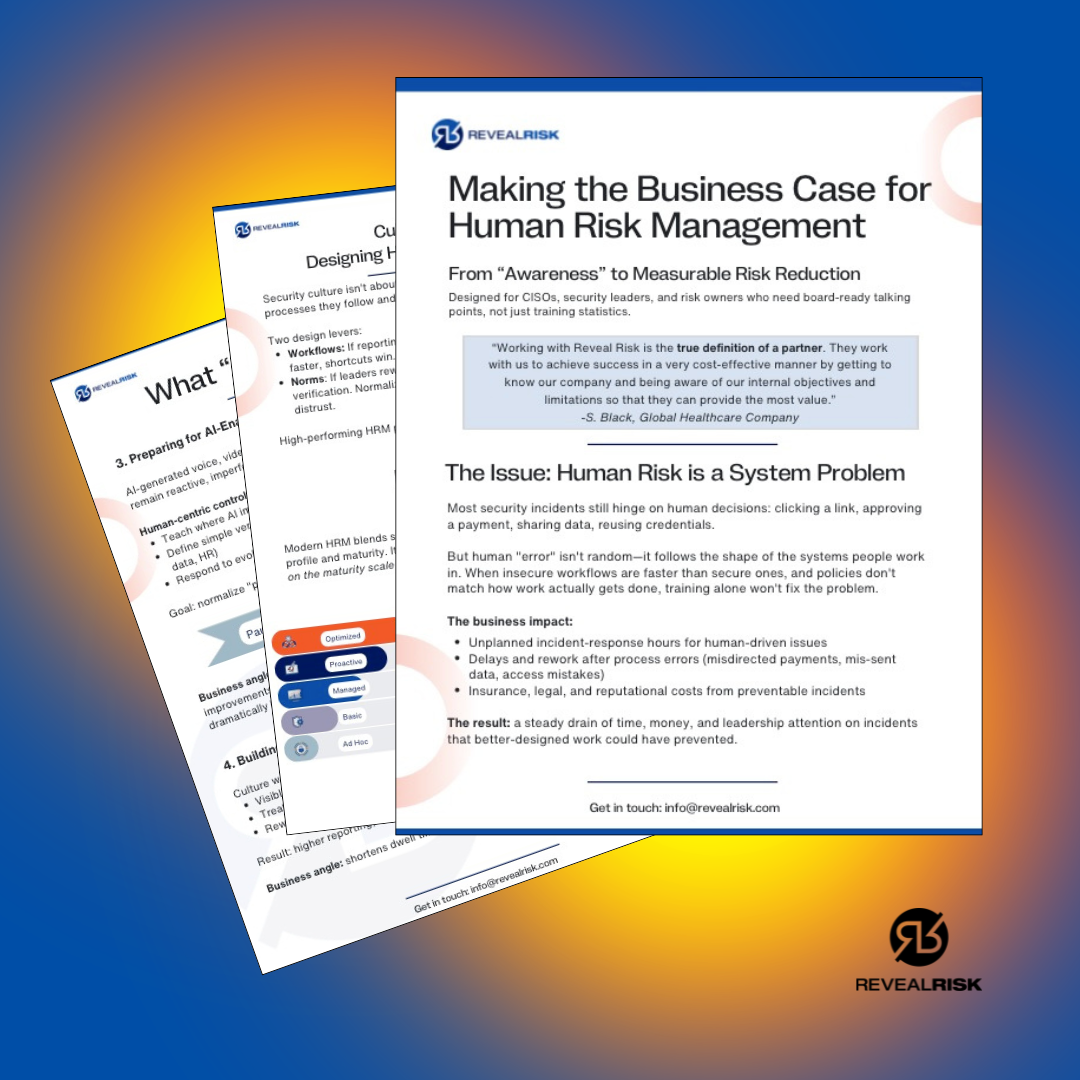
HRM Business Case Feature

Build the Business Case for Human Risk Management.

Building a business case for Human Risk Management can be challenging—especially when security investments are often viewed as cost centers.

This guide outlines how to position HRM as a strategic initiative, quantify its impact, and gain leadership buy-in.

Human Risk Management FAQs.

What is human risk management in cybersecurity?
How is HRM different from security awareness training?
What metrics measure human cyber risk?
What is security behavior engineering?
What is a security champions program?
What is phishing risk management?
How do you measure HRM effectiveness?

Build a human risk management program that actually reduces risk

Get the latest Human Risk Management insights (and more) from our team.