
 Aaron Pritz

Podcast
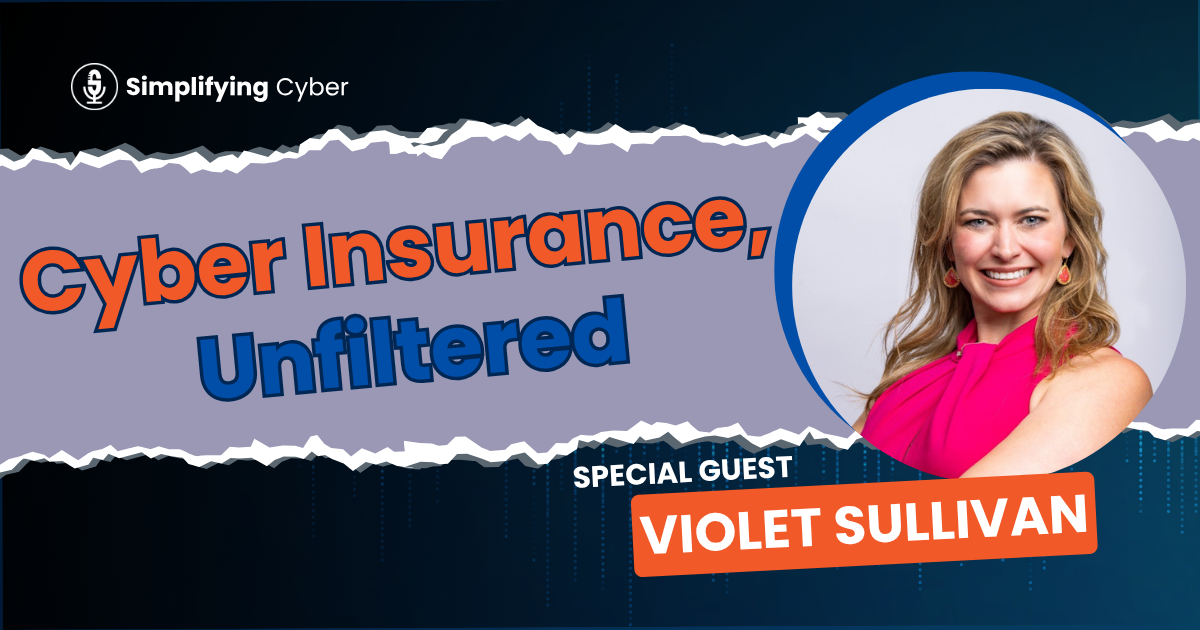
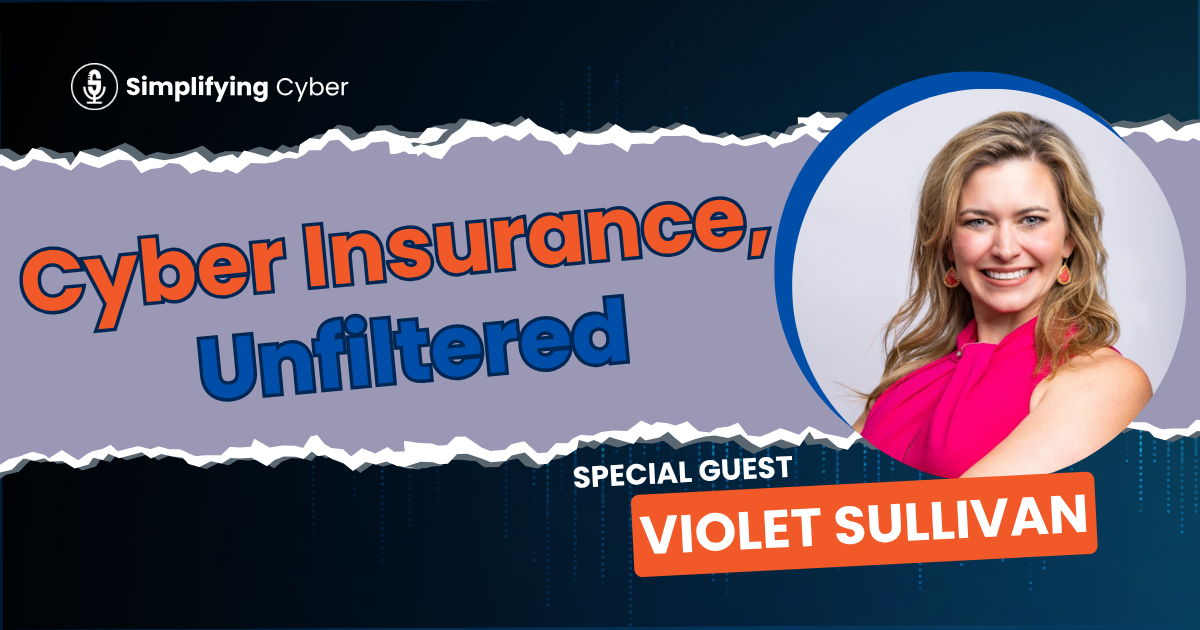
Cyber Insurance, Unfiltered
Cyber Insurance, Unfiltered
The fastest way to turn a cyber incident into a business disaster isn’t ransomware, it’s confusion. We sit down with Violet Sullivan, AVP and Cyber Solutions Team Lead at Crum & Forster, who has worked across cyber law, breach notification, digital forensics and incident response, and now cyber insurance. That vantage point lets her translate what each group needs when pressure is high and everyone is speaking a different language.
We get practical about the moments that create real-world chaos: overlapping roles like “breach coach,” acronyms that make leaders freeze, and the dangerous assumption that someone else already handled comms or law enforcement outreach. Violet breaks down a cleaner way to run the response by focusing on function: legal help, technical help, and operational help. We also talk about why crisis communications deserves a seat at the table early, how PR teams organize messaging by audience, and how to avoid the cleanup phase that happens when people speak too soon.
Then we zoom out to the contract that quietly shapes the whole response: cyber insurance. Violet explains why insurance is not “admitting defeat,” but a risk transfer mechanism that can fund response vendors and influence decisions when you cannot afford mistakes. We also tackle emerging AI risks, including more believable social engineering and the legal concern that sharing privileged legal advice with AI tools may put attorney-client privilege at risk.
If you want clearer incident response planning, better tabletop exercises, and fewer “who has the ball?” moments, hit play. Subscribe, share this with your security or legal team, and leave a review with the one part of your response plan you want to simplify next.
Listen and watch wherever you podcast:
On Spotify, Apple Podcasts, or Buzzsprout.
Or watch the whole recording here on our YouTube Channel!
Full transcript of this episode:
Aaron Pritz (22:41)
Thanks for tuning into Simplifying Cyber. I'm Aaron Pritz. And today we're joined by Violet Sullivan.
Cody Rivers (22:50)
and I'm Cody Rivers.
Aaron Pritz (23:08)
AVP and Cyber Solutions team lead at Crum and Forrester. And we wanted to have her on the show. Juan Bronwen, who's our fearless ⁓ coordinator and director, is joining us for this talk as well. And you'll see her more in the future. But Violet has some really interesting experiences and perspectives because she really works at the intersection of cyber law as an attorney and cyber insurance, which we all have questions about, and then incident response, which probably means she didn't sleep. ⁓
through many nights at a period in her career. without further ado, Violet, I'll let you introduce yourself, give a little bit of background on how you worked your way into cyber. And then we want to go deep on a topic or two, probably around cyber insurance and incident, where we really want to try to get into some meaty topics or learnings that you've had that our listeners can learn from and maybe do something different preventatively or in the midst of an incident.
Violet Sullivan (24:04)
Well, thank you for having me. feel like you already introduced me well with that kind of triangle of cyber law, cyber insurance and incident response. ⁓ I did start on the breach notification side. So when I came into cyber, I really saw that there was a bigger picture operationally than just the legal side. So that's when I thought I don't want to just go into privacy and be a breach coach. I want to understand the technical. So I went from breach notification. did pre.
Cody Rivers (24:04)
So we're.
Violet Sullivan (24:32)
post-breach and then I went to pre-breach and learned all of that risk management stuff, pen testing, vulnerability scanning, all of the compliance frameworks that you have to think about and weigh and compare. Remember back when they did all the spreadsheets that would compare because you didn't have any compliance frameworks? And then I decided to go to the forensic side because I really wanted to be on the front line. I wanted to understand what happened on the scoping call and the big decisions that happened.
And all of that collective experience operationally, technically, legally helped me to get where I'm at, which is leading risk solutions for Crumb & Forrester, an insurance company as part of a bigger brand of insurance companies called Fairfax. And I love working with a team in cyber insurance and I get to work with not only the people on the insurance side, but I actually get to work with all the vendors that I used to be a part of, right? So from breachcouncil.
forensics notification. All of those colleagues that I've been friends with over the years are now the people that I get to work with every day.
Aaron Pritz (25:38)
You must have really developed some good relationships through all those incidents because I've never heard anybody say, I love hanging out with lawyers, vendors and for, and yeah, exactly.
Cody Rivers (25:47)
Cyber people.
Violet Sullivan (25:50)
You know, it's funny because in group chats at one point I was like calling them my cyber friends and they're like, Violet, you can call us your real friends now.
Aaron Pritz (26:00)
You've gone past that point. No return.
Violet Sullivan (26:01)
So they are truly,
we do truly get to that level of connection and nerdiness.
Cody Rivers (26:08)
Yeah. So who's easier to work with or who's more difficult to work with? Lawyers or security people?
Violet Sullivan (26:12)
Not lawyers.
Aaron Pritz (26:16)
or insurers. Let's just put the full hat trick in there.
Violet Sullivan (26:16)
⁓ okay, okay. Here's the question.
Neither one, neither one can hold back the, ⁓ the face that they get, the know-it-all face that they get whenever there's an MSP on the phone. Neither one can hold back. And I've had to coach so many technical people. I say, and I say that is like telling their baby, their, the baby's ugly. Do not tell them their baby's ugly. Take a step back. Don't roll your eyes. ⁓ so I think as far as
Aaron Pritz (26:43)
But what if
it's horribly ugly, Violet? What do we do there? It's almost... this is on the intro. They're not part of the friend circle. Got it, got it.
Violet Sullivan (26:47)
You can't say that to them on the first introduction. Why would you? It's like the, it's like the side filter. Well, I
would say I get along with the technical probably more just because there's so much, ⁓ it, it, there's so much neurodiversity and I'm really attracted to a lot of the neurodiversity in our field. ⁓ and I think some, I love a lot of the attorneys, but
Sometimes you get those attorneys that give us a bad name.
Aaron Pritz (27:19)
Mm.
The little cross bros. No, just kidding.
Cody Rivers (27:22)
So you've.
Bronwen Hudson (27:24)
Yeah.
Cody Rivers (27:25)
So you've been in a lot of rooms. We talking about this earlier and little Prepper heard a lot of great, names and, know, security firms, insurance folks, all speaking different languages. Give us a story without names. What's likethe most chaotic miscommunication you've witnessed where everyone thought someone else was handling it?
Aaron Pritz (27:43)
Hmm
Cody did not prep any of us for this question, but I love it. ⁓
Violet Sullivan (27:52)
No, but I love it. I like it.
Cody Rivers (27:52)
It just came to me. I
was like thinking like, man, this is a wild, wild west here. So I just want to hear from the.
Violet Sullivan (28:00)
So this is, so I think some of the terminology on what the different players are called. And I think I take this for granted that I know these things because we speak in this language. But internally, the playbook might only have a word for, okay, there's a breach counsel and then there's ⁓ privacy counsel. And they might call all things the same.
the same name. But what I usually like to say like when we're on a call is we have, we're going to have legal help you and technical help you. And there might be people under those two, but those are like the two top ones first, then we'll go operational, right? Like how do you print out 1 million letters? Well, we can't do that in our print shop over here. So you have to sit there and I think bring it back to like function and workflow and not just using terminology that you think is like it.
I was actually just on a call today and someone was like, yeah, we're the recovery vendor. We're going to help the DFIR vendor do this. Why are you saying DFIR? Nobody else knows that. And internally, you may have the one security person that knows what DFIR stands for, right? Digital Forensics Incident Response for everyone. It's something that we use all the time, but if it's their first time and think about who you have on the call, you might have the superintendent of a school. You might have...
Cody Rivers (29:16)
There you go.
Violet Sullivan (29:26)
the head of the board, you might have people that don't understand the language. So I think that the biggest misconception that creates problems is not knowing who has the ball and not knowing what we're calling the different players, because this is a big team sport. It's a marathon, not a sprint. So all of the idioms at once, it is important to know who you're tossing the ball to. And I think that that also comes a lot with the difference between
when you have a different technical vendor doing forensics and looking back at what happened versus the recovery, which is of course, getting things back online. And you can do so much simultaneously that I think people kind of forget that we got to get up and running it too. can't just, know, technically it's so interesting to do forensics and look back, but you're not going to make money until you start getting things back online.
Aaron Pritz (30:21)
Yeah. I want to double click on who's got the ball. Cause that, would be my chaos item that I've seen on all sides of the table really. And sometimes it's a little bit of, especially in tabletops where life and death and outages are not on the line. And, know, I've seen everything from like legal privacy, cyber, and the CIO all thinking that they're the person making the decisions. One probably because it's not that well worked out in the playbook and there's not a race that clearly.
Cody Rivers (30:46)
Mm-mm.
Aaron Pritz (30:51)
defines it, but how often do you see it that when live fire is happening?
Violet Sullivan (30:57)
or calling who's who is taking the, ⁓ what would you call it? Like the four, like taking the forefront and calling law enforcement, right? Is like, there's always someone rogue that's called law enforcement and you're, or you'rewalking back from communicating to employees or like, we already did this. So that's when I hear, when I'm on an initial call, I really like when I hear the breach counsel, the, attorney that's leading say,
Aaron Pritz (31:08)
Yeah.
Violet Sullivan (31:26)
How have you already communicated? Almost like assuming, like, can you just tell me, have you done anything yet before we jump into the basics? What have you already said so we can clean up whatever was already laid down? I think another mistake that I've seen is just confusing, you know, okay, so news for today, the breach coach term is trademark. I know because I got a cease and desist.
When I made a sticker one time, ⁓ but that word, breach coach, has been used to reference the technical and the legal. And when you say it from the technical side and you give someone a decision and you're not being clear and your plan isn't clear, and I've seen plans that basically define it and then people jump in and think another thing, you can't have the word breach coach and not,
Cody Rivers (31:55)
Whaaaat?
Aaron Pritz (31:57)
which is
Violet Sullivan (32:22)
say this is counsel or this legal, this is technical. You can't have these same words overlap. ⁓ The other big
Aaron Pritz (32:26)
Yeah.
There's going to be attorneys
that are going to be super busy because I just Googled breach coach and I'm seeing trademarked services by three different vendors that are in the recommended ⁓ hit results.
Violet Sullivan (32:40)
No, I definitely got it.
I definitely got it. Do not use so that's why I just write Beach Coach every time instead intentionally No, yeah, I I and spell it wrong because I'm I'm trying not to Just looking fun at the trademark
Aaron Pritz (32:50)
Beach coach, like on a beach. nice. Nice. Good loophole. That's a good loophole.
Cody Rivers (32:56)
La la la la fire.
Aaron Pritz (33:00)
Yeah. Awesome.
Cody Rivers (33:03)
Yeah, you you mentioned some great things there and I do, we do a lot of instant response. And I think another thing I see a lot is to your point, comms, like you've always got legal, you've always got the cyber folks, you've got the, um, overaggressive executive that wants to be in all the different rooms and make all the decisions. And you're like, in reality, it doesn't happen. But comms to your point rarely gets brought in, if not late. And you're like, you've got internal communications, you've got external. And the point you brought up that I really like is by the time the council gets there,
what has already been said, because oftentimes your point, and that's, I didn't think about that, it's like, they're trying to do some cleanup, because it's kind of pulling back and say, okay, well, I gotta work from here. I don't get to start fresh with a new template. I gotta say what's been said, then how do I come over top of that, or how do I come around? So ⁓ that's a really good point to think about.
Violet Sullivan (33:50)
Well, and I got it from breach council. That's where I heard it first. And I also like from, I've learned a lot from ⁓ crisis communications firms that specialize in cyber are so good at this and they're so on top of it that I think sometimes we downplay. Usually we only see that money spent when there's a big, huge scale event. But I learned so much from the PR side of the house because we don't, technical people don't think about
you know, we're fax, fax, fax logic. ⁓ So when I've sat in on sessions and learned from the PR side, they will organize the communication in audiences. So they'll have a communication. They'll all be similar in case it gets copied for the wrong place, but it will be like, okay, have way you communicate to the board, way you communicate to these customers, way you communicate to your internal teams, your sales teams. All of that is
something that can also be in that crisis communications plan. And what I find too is that there's already probably a crisis comms plan for hurricanes, active shooters, some other type of disaster that can usually be linked into cyber. And you can push marketing to go ahead and look at the plan and see, do we have any new audiences? And then I always usually tell them about security researchers. like, Hey, there's a whole different media that asks different questions. And if you get a call from, you know, Brian Krebs, then you have a different
response than you do locally. Yep, do it.
Aaron Pritz (35:19)
Tell them everything. Don't hold back. No, I'm just kidding. You don't want
Cody Rivers (35:21)
Yeah.
Aaron Pritz (35:23)
to.
So a lot of people in cyber end up staying in one lane and you've had the chance to kind of branch across law and cyber and insurance, which probably helps with some of that friction of kind of who's got the ball and language miscommunication or translation issues. What drove you across the three and how has that helped you?
be a better communicator or bridge that communication divide across those functions.
Violet Sullivan (35:55)
think that's a great question.
think that it was always about learning new skill sets. when I went to, from when I started, I was on the operational side. And then I knew that I had just gone through some of the largest breaches of 2014 and 2015. And I knew that I could take that learning and learn how to give effective tabletops from the operational side. We felt like, you know,
the company I worked for, had the first operational retainer, whereas you have these technical retainers. Well, we had operational retainers for retailers that needed call centers stood up, that needed, you know, the notifications within three days, we could guarantee, right? Those, those pieces were very formative for me, but then I needed to go learn risk management. So I learned the front end pre-breach. ⁓ and then post-breach,
I wanted to go back and learn technical. So that's where I went. And I think insurance was like that final piece where I was like, wait a second, the entire economic structure of this entire crisis response very much depends on a bunch of paragraphs. And those paragraphs are in the insurance policy. And I really wanted to learn how it all worked together. And I feel like that's kind of the central hub because it is the place where you can, you can try to be right as a security professional a hundred percent of the time.
And you can't be right 100 % of time or else we wouldn't see these headlines. ⁓ And so having this, it's really just another, just like you have contracts in place with all of your security vendors. A insurance policy is just another contract. It's another risk transfer mechanism to balance out and be part of your total cybersecurity view. And I just like to debunk any myth that it's like admitting defeat or any, any kind of like, ⁓
will never use that because it's another part of the way that that a CISO or CIO or anyone in that security leadership, it balance risk.
Bronwen Hudson (38:06)
I have to jump in with my question because I think I want to double click on this too because I think this is an opinion question. You're at the intersection of all of these fields, which means that you speak all languages simultaneously. What's your opinion on how we communicate in an accessible way to all of those audiences? Do we have a responsibility to be defining our acronyms and our terms all the time? How are you doing that?
Violet Sullivan (38:34)
Well, one simplifying cyber, right? This whole podcast is focused on simplifying. I think that this is the way you should. We should have terms and ways that we can break this down where we don't have to sound important or special and we don't have to also do so much repetition. How many times do people repeat the same phrases over and over again? ⁓ I think that there's a lot.
Bronwen Hudson (38:37)
Thanks.
Violet Sullivan (39:03)
that you can also do. ⁓ I went to, actually got this from RSA last year. It's a kid's book, Chief Information Security Officer. can't remember what company this was for, which should be marketing. I go to career day for my kid's school and I talk about, and I realized the best way that I've been able to explain it is I tell these kids, said, think about your diary and think about you put all your secrets in the diary.
and someone took your diary, they put all your secrets out everywhere and they locked you out of your diary so you can't have it anymore. And then I kind of explain, hey, when you have data and you let go of that data, it could be really personal to you and you could be really frustrated about it. And then I talked through how we prevent that and how we can lock the diary up and put it in a safe and put it, you know.
All of those things. So I think that there's ways that you can make it accessible. And I think you could start thinking about this, not just for the board level and exec, because everyone's focuses so much on translate to board, translate to board. Yeah, but board people are also fathers and mothers. So just translate to humans.
Aaron Pritz (40:16)
Mm-hmm.
Cody Rivers (40:16)
Yeah.
Aaron Pritz (40:18)
And grandfathers.
Cody Rivers (40:18)
Well, yeah. And about are you still still adjunct professor, teach professor at Baylor University? OK, because I kind of thought about this, you know, and your point is like asking questions is a big thing. Sometimes people are too proud of the egos there. They don't ask the right questions, but students typically usually ask more questions. And I kind of think of like, what what's the question your students ask?
Violet Sullivan (40:26)
Yes, I love it.
Cody Rivers (40:46)
that you secretly think more executives should be asking.
Violet Sullivan (40:52)
⁓
The biggest question is just.
Who, like what makes it a breach? The simple question, right? And the thing that I come down to, which you might think I'm going one way, switch the other way. You might think I'm going to the whole breach as a definition in different states, blah, blah, blah, blah, blah. Instead, I'm just gonna say every company would have a plan and you would look at the plan first because before you make a decision on notification, you have to decide whether or not your company needs to escalate the incident. So I try to go back.
to I like that question because it kind of says, okay, it's not just the lead. While it is a legal determination and we don't want you to say the B word before you need to, you need to also think about how it's escalated within your internal company and how it gets to you as like once the council's brought in, there's already been a bunch of kerfuffle that's happened at the incident level. And think about all of that time that there is an escalation pathway internally that we don't really
explain again to the board or to the executive team what that escalation pathway looks like. So like when I do tabletops, I usually say that to me, that's the most important part is the escalation pathways because you've got to show how someone in help desk connects the dots with someone in networking. Because if you can't show that those dots are connecting, these things could be happening and two different bells going off that you're not, you'renot seeing in real life.
Aaron Pritz (42:34)
Makes sense.
Cody Rivers (42:35)
I
100 % agree.
Aaron Pritz (42:38)
So let's talk a little bit about AI and, you know, kind of in, we can stay in the incident related topic, or we can talk about more in the prevention side of it. How is AI reshaping what you're doing from a legal standpoint, as well as risks that you're seeing with clients as they're trying to either get in front of, or catch up with what's going on in their organizations.
Violet Sullivan (43:04)
Well, I think the biggest thing legally recently within the past month has been that big change in the fact that you divulging things to AI. If it's legal advice, putting it in there is going to basically remove attorney-client privilege. That's the biggest huge bomb that's hit the legal side from AI because it really, it really jeopardizes that, that defense that you use with your
with your client and your lawyer when that thing gets exposed, when the content that you have created with your attorney gets exposed to AI, which you think you might be cleaning up commas and it's exposing it to losing privilege. ⁓ I think...
Aaron Pritz (43:47)
How does that
play out on like AI recorded meetings? Like if you're recording a meeting with a council in teams and it's doing a transcription, is that the same risk as putting it into Gemini and asking it to some, know, yeah.
Violet Sullivan (43:56)
that's a great question.
I ⁓ friends that have written up
all these articles for LinkedIn on this that I have all saved. So I'm gonna have to ask, I don't know. I mean, this is within the last month that this stuff has developed.
Aaron Pritz (44:08)
Yeah. Nice. Okay.
Cody Rivers (44:14)
Yeah.
Aaron Pritz (44:15)
Yeah.
Violet Sullivan (44:16)
I think from a cyber side though, this is just the social engineering fact for us has been we've seen so many more believable social engineering attempts.
Cody Rivers (44:32)
Yeah. There's obviously lot of going on with AI that we're not even going to get into on this conversation, but what's kind of like your biggest eye roll moment right now when people are like, well, I have AI, I'm good to go, don't worry about this. And you're like, it's just like, it's like, it's like, you know, knives to your ears is when you're like, that's not a solution, but you know, they, leverage AI. And so they're, they're in a good spot.
Violet Sullivan (44:57)
⁓
I don't know, can I say cloud instead? Cause it's like that myth of cloud security. I put everything in the cloud. No, I don't need MFA. eh
Cody Rivers (45:06)
Absolutely, absolutely, Yes, save.
Aaron just put one, I had a good article the other day about the entire Dell thing right now online, the compliance and.
a lot of that. I think to your point, you see a lot of fallacy of like, there's marketing and AI and people kind of say, I'm good to go. in your area where you're solely on the incident and like the post side of things and the you see, hey, like, that was a false sense of security, or here's, here's the reality of it. So a lot of times I hear those stories.
Violet Sullivan (45:38)
I think also confusing with
automation, like I will stop meeting sometimes and say, you you mentioned AI, but really we're talking about process automation. And they'll be like, yes. And like just, we don't have to make it shiny. We can just talk about what the outcome is.
Cody Rivers (45:48)
Mm-hmm.
Yeah, yeah, I totally agree. One thing to kind of pivot here, too, I always and this was not prepped at all. So by the way, I want to surprise you. But every time and every episode, I kind of say give the audience the first time they'remeeting Violet Sullivan, give them like a fun fact. What does someone who may even who may even know you currently for a couple of years doesn't know what's like a fun fact could be a cool hobby, a fun experience you had. That's a good story that we can share with the audience.
Violet Sullivan (46:17)
I don't know what to do.
Well, in high school I was a heart of Texas, rodeo sweetheart.
Cody Rivers (46:28)
That's phenomenal. Please share more, Library. What does that entail? How do you get that title?
Violet Sullivan (46:30)
It's not cyber.
Aaron Pritz (46:32)
Yeah, we're.
Violet Sullivan (46:35)
You get to wear a sash.
Aaron Pritz (46:35)
Do you enter on a bull
or on a team of...
Violet Sullivan (46:37)
No, you get to wear a sash and you get to give out trophies to the Bull Riders.
Aaron Pritz (46:42)
Okay, alright.
Cody Rivers (46:43)
That's awesome. very nice.
Violet Sullivan (46:43)
Thanks.
Aaron Pritz (46:46)
Cool.
All right. So let's while we're on the personal topic, what do you do from a from a nonprofit give back? Like, where do you spend your time kind of adjacent to profession that you're passionate about?
Violet Sullivan (47:02)
well, I am a very big contributor and love of all things that empower women in cybersecurity. And I know there's so many amazing groups like YCs and WISP. But in the insurance world, about three years ago, we realized that there wasn't really a business risk focused cyber organization that we could all connect with. we as a kind of
cohesive group, the insurance market, along with the vendors and the law firms that we work with, we created International Women's Cyber Risk Alliance. And so that's IWCRA.org. I serve as CEO of IWCA or IWCRA. And we have a great group of, think we're, we have over 1700 members in 18 different countries because this is a, insurance is a very global business market.
Cody Rivers (47:50)
awesome.
Violet Sullivan (47:54)
Right. And it funds a lot of this cyber events and responses that you see. And there's a lot of women that really want to connect. And I think to want to be mentored and menteed. And ⁓ I think that it's a great way for women to connect. Right. Cyber is already something that there's a heavy male population in cyber technology. But in cyber, when it comes to the insurance world, it's also
very much was a traditional boys club. And I think that having that connection with women in the insurance market, we've asked each other questions like, how do you ask for a raise? Or how do you get on these speaking panels? How do you get podcasts? Right? How do you, how do you learn from each other? And that's really what we're trying to do is network and learn from each other in the industry.
Aaron Pritz (48:46)
Awesome. do member or prospective members get involved? And it sounds like it's, you got to be in the industry. It's international. So probably geography doesn't matter. But if we have listeners that are playing in this space, how do they reach out and get, get plugged in?
Violet Sullivan (49:03)
You just go to IWCRA.org and there's a become get involved tab. You click it and you put your name in to become a member. So you'll get newsletters. There's events all around. There's actually an event in London in a couple of weeks and from then, Toronto actually tonight, but it's going to be passed on for taping. So we have events all over the place and a lot of virtual events that you can join from anywhere.
Aaron Pritz (49:31)
Well, shifting back to the work side, maybe one last question, Cody, if you want to T one up as well, that's cool as well. But if you were able to call yourself, let's say 10, 15 years ago and give yourself some advice specific to career and cyber, what would you say on that call?
Cody Rivers (49:32)
That's really cool.
Violet Sullivan (49:52)
⁓ easily, easily I would say just because you went to law school doesn't mean you have to go to a big law firm. That the ego of being a lawyer is something that as soon as you drop it, as soon as you put it out the wayside, you can follow your skills and passions. ⁓ I think being a lawyer and getting practice in law is so helpful. But I think that law school actually feeds that ego of
Aaron Pritz (50:09)
Hmm.
Violet Sullivan (50:20)
Well, I just spent a lot of money on my degree. I need to go work for this law school and kind of lose my, I mean, big law firm and lose my soul. And I think dropping the ego, and I think that's probably for any, any, any know-it-all type profession. When you can drop that know-it-all ego, I think you're, you're going to be happier. And I feel like that, the moment that I realized I didn't have to apologize for not being at a law firm.
and realize how I could be used in different ways, it was so freeing. And so I would have just told myself sooner.
Aaron Pritz (50:56)
I think you're right that is applicable elsewhere and probably in almost every profession if somebody feels entitled to that they should be at the next level or that they're you know out out performing everyone else so why not me why not me and I think that gets in the way of learning and progress
Cody Rivers (50:57)
Yeah.
Violet Sullivan (51:13)
Well, and this is for baby lawyers out there. It's like you, get this, this mindset of going, you're not a real lawyer unless you're at a law firm. That's almost like a thing you would tell yourself or you kind of like, don't know if people say it out there, but that's like the, internal monologue that I've heard a lot of other lawyers say, Oh, well, you don't really practice. I'm like, but you hold the bar in two states, right? Or, know, you, you have these experiences and it'slike, you don't
Cody Rivers (51:14)
Yeah.
Violet Sullivan (51:41)
You've got to throw away that whole idea of you're not a real lawyer unless you do it this way.
Cody Rivers (51:47)
Yeah, on the last thing to you, most of us at some point in life or in work are involved in a breach or hear about something. for those who have been blessed not to have, and if think if cyber insurance existed for everyday life and you could file a claim for you got fished into a bad relationship, yeah, well, you got fished into a bad relationship. You hit a sketchy Amazon deal, whatever it could be. What would be the most common claim that you think would be if it's on the personal side?
Violet Sullivan (52:04)
have personal cyber.
account takeovers.
Cody Rivers (52:21)
Hmm. Yeah, that's a point.
Violet Sullivan (52:23)
I guess that would be more of the most scary claim to me, maybe not most common, but to me, that's where I think privacy is heading is instead of worrying about, know, I think the financial institutions have really good compliance frameworks, but I think that account takeovers ⁓ with, you know, airline miles and ⁓ rewards, you know, all of these things that we have logins for and social media, I think identity is more important than just what we define PII as right now. think that the birth of is going to change.
Aaron Pritz (52:59)
Yep. And not even talking yet about deep fakes and audio deep fakes and all of that. We've seen quite a bit of that in the last, especially the last year. Yeah, it is. It is for sure. Well, Violet, thanks for coming on the show today. Goodto get to know you in the virtual world and maybe perhaps at some point we'll all get to meet in the real world. Thanks again so much.
Violet Sullivan (53:05)
yeah, I can't get that. That's a whole other podcast.
Cody Rivers (53:09)
Hold on to podcast.
Violet Sullivan (53:19)
Well, thank you for having me. Have a great, great day.
Related content.
).webp?width=352&name=2025%20Linkedin%20Youtube%20Cover%20(Billboard%20(Square)).webp)